Destruction Services Malaysia – Secure, Compliant & Sustainable Solutions
What Are Destruction Services?
Destruction services involve the secure and responsible disposal of products, assets, and materials that are no longer usable, required, or compliant. These may include off-spec, damaged, rejected, expired, or recalled items.
Professional destruction services ensure that such materials are handled safely, preventing unauthorized use, protecting sensitive information, and maintaining compliance with environmental and legal regulations. At the same time, these services promote sustainability by adopting eco-friendly disposal and recycling practices. Our destruction services also include secure data destruction handled by our specialized division.
Types of Destruction Services
Businesses require different types of destruction services depending on the nature of their materials:
- Product Destruction – Secure disposal of defective, damaged, or rejected products to prevent market re-entry.
- Expired Products Destruction – Safe handling and disposal of end-of-shelf-life goods to ensure compliance and safety.
- Asset Destruction – Destruction of obsolete equipment, confidential documents, and hazardous materials.
- Data Destruction – Secure wiping or destruction of sensitive digital and physical data to prevent breaches.
Destruction Services for Off-Spec, Damaged & Unwanted Stocks
Off-spec, damaged, rejected, or unwanted stocks can accumulate due to quality issues, transportation damage, expiration, or customer returns. Managing these items responsibly is essential to prevent risks and maintain brand integrity.
Manufacturers often rely on professional destruction services to ensure secure and environmentally responsible disposal of such inventory. These services help transform waste into manageable resources using cost-effective and sustainable methods.
Key Considerations for Managing Surplus Inventory
Environmental Responsibility
Adopting eco-friendly methods such as recycling or composting to minimize environmental impact.
Risk Mitigation
Minimizing risks associated with defective or expired products re-entering the market.
Compliance
Adhering to regulatory requirements for the disposal of hazardous and non-hazardous materials.
Secure Disposal
Ensuring products are securely handled and disposed of to prevent unauthorized use or access.
Cost Efficiency
Implementing cost-effective solutions for managing surplus inventory and disposal processes.
Safe & Sustainable Destruction Services for Manufacturers
Professional destruction service providers offer expertise in handling surplus inventory safely and efficiently. By partnering with a reliable provider, manufacturers can protect their brand reputation, comply with regulations, and support sustainable waste management practices.
While some materials may be recycled or upcycled, certain products require complete destruction following strict disposal guidelines.
Destruction Methods
Depending on the nature of the materials, destruction services may include:
- Incineration: Secure burning of materials into ash using controlled systems
- Shredding: Breaking materials into small, irrecoverable pieces
- Crushing: Compacting items into unusable forms
- Composting: Environmentally friendly disposal for suitable materials
- Direct Landfill: Safe disposal in designated landfill sites
Why Businesses Need Destruction Services
Destruction services provide multiple business benefits beyond disposal:
- Brand Protection: Prevent leakage of defective or rejected products
- Data Security: Protect sensitive information and components
- Regulatory Compliance: Meet environmental and legal requirements
- Cost Efficiency: Reduce storage and handling costs
- Environmental Responsibility: Support sustainability and reduce waste
These services are especially important for managing off-spec, damaged, and unwanted inventory, ensuring such items do not reach the market.
End-of-Shelf-Life (Expired) Product Destruction
End-of-shelf-life products, also known as expired products, require careful handling to prevent risks related to safety, compliance, and environmental impact.
Businesses must follow strict regulations to ensure expired products are not distributed or reused. Proper destruction services help maintain product integrity and consumer trust.
Reducing Expired Products in the Supply Chain
Businesses can reduce expired inventory through effective planning and operational strategies. Proper inventory management, supplier coordination, and product handling play a key role in minimizing waste.
Practices such as First-Expiry, First-Out (FEFO), inventory tracking, and sales analysis help prevent overstocking. Collaboration with suppliers ensures optimized ordering, while proper storage and staff training reduce damage and spoilage.
Promotions for near-expiry products, customer awareness, donation programs, improved packaging, and continuous process improvements further support efficient inventory management.
Key Considerations
- Cost Efficiency: Optimize disposal processes to reduce storage, transportation, and handling costs.
- Environmental Responsibility: Reduce ecological impact through proper recycling and sustainable disposal practices.
- Regulatory Compliance: Follow disposal regulations to ensure safe and legal handling of materials.
- Risk Management: Prevent health hazards and protect brand reputation by controlling defective or expired products.
- Consumer Trust: Maintain transparency and build trust by ensuring responsible and secure destruction.
Product Recall & Warranty Destruction
Product recalls and warranty claims require secure and controlled destruction to prevent defective or unsafe products from re-entering the market.
Returned items undergo verification and assessment to determine whether they can be repaired or must be destroyed. If destruction is required, services are carried out in compliance with legal and environmental regulations.
Our destruction services include secure processing using appropriate methods such as shredding, crushing, or other controlled techniques, depending on the nature of the product.
We maintain strict security, confidentiality, and documentation throughout the process, including secure handling, storage, and issuance of a Certificate of Destruction.
By following responsible disposal practices, we also support environmental sustainability through recycling and proper waste management.
Quality Issues
Even if a product doesn't immediately endanger public safety, it could still be recalled if it contains flaws that impair its effectiveness or durability. This may involve problems such as broken parts or components..
Voluntary Recalls
Occasionally, businesses decide to start voluntary product recalls as a preventative measure in case problems spread widely or get serious..
Disposal of Waste
Any waste generated from the destruction process (such as ashes from incineration or shredded materials) must be disposed of in accordance with applicable waste management regulations. .
Certificate of Destruction:
After destruction, the vendor typically issues a certificate of destruction to the manufacturer. This document confirms that the recalled products have been destroyed in accordance with the agreed-upon procedures and standards.
Destruction of Assets
Destruction services also apply to assets that are no longer usable or required, including obsolete equipment, defective products, confidential documents, and hazardous materials.
The process involves secure collection, transportation, and appropriate destruction methods, ensuring compliance with environmental and legal standards.
Data security is maintained through proper data wiping or physical destruction, and a Certificate of Destruction is provided as proof of compliance.
Recycling is prioritized wherever possible, and hazardous materials are disposed of safely to minimize environmental impact. Proper documentation, audit trails, and efficient logistics ensure a transparent and cost-effective process.
When Should Assets Be Destroyed?
Assets should be destroyed when they reach the end of their useful life, pose safety risks, fail to meet regulatory requirements, or create data security concerns.
Other situations include product recalls, contamination risks, and end-of-lease or ownership conditions where assets cannot be reused or resold.
Why Businesses Need Destruction Services
Destruction services provide multiple business benefits beyond disposal:
- Brand Protection: Prevent leakage of defective or rejected products
- Data Security: Protect sensitive information and components
- Regulatory Compliance: Meet environmental and legal requirements
- Cost Efficiency: Reduce storage and handling costs
- Environmental Responsibility: Support sustainability and reduce waste
These services ensure that unwanted materials do not re-enter the market, protecting both consumers and brand reputation.
Our Destruction Process
Our destruction process ensures complete security, transparency, and compliance:
On-Site Collection
1. Asset listing
2. Decommissioning
3. On-site data destruction (optional)
4. Packing and haul-off
Real-Time Tracking
1. Transfer of liability
2. Transparent chain of custody
Sorting
1. Asset tag removal
2. Basic material categorization
Data Destruction
1. Hard drives wiped or shredded
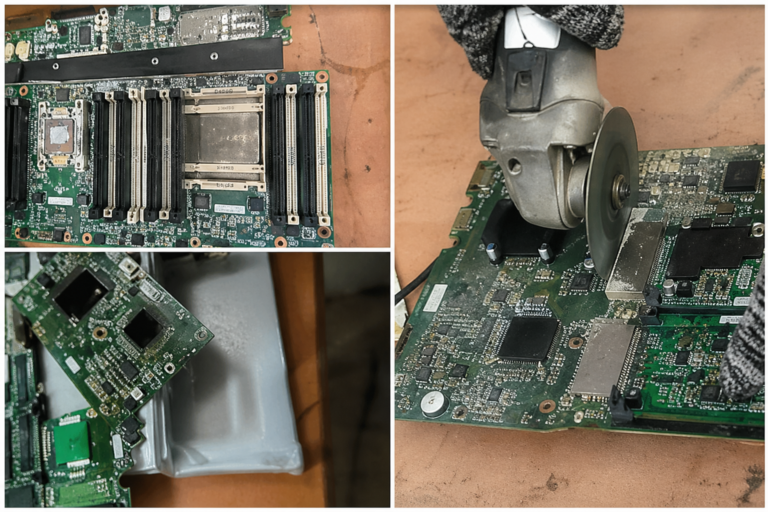
Dismantle
1. Dismantling of components
Reporting
1. Certificate of recycling
2. Certificate of data destruction
Recycle
1. Processing of scrap materials
Get Destruction Services
If you are looking for secure, compliant, and environmentally responsible destruction services in Malaysia, our team is ready to assist you.
For any destruction service requirements, please feel free to contact us via email.
Our Service Location in Malaysia
How Our Destruction Process Works:
Last Updated on 4 days ago by Thanam Industry